
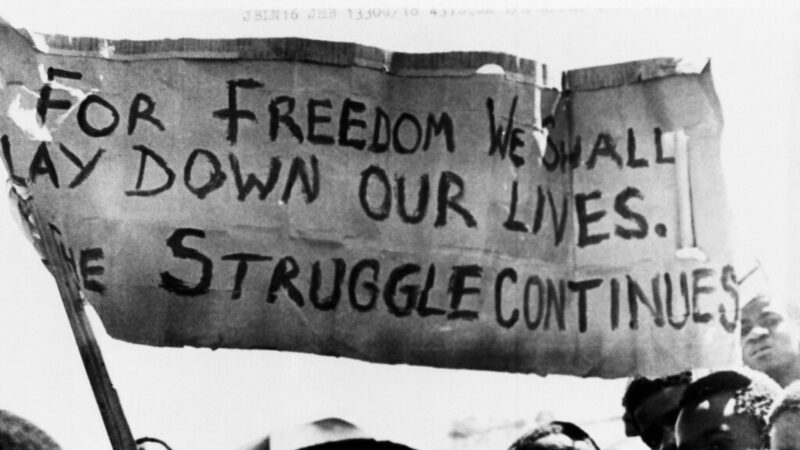
Two former police officers have been found guilty of murdering anti-apartheid activist and student leader Caiphus Nyoka in 1987. The verdict comes more than three decades after the killing during South Africa’s white minority rule.
Conviction Decades After the Crime
Abraham Engelbrecht and Pieter Stander, both in their 60s, were convicted by a judge in the Gauteng High Court in Johannesburg on Tuesday. They will be sentenced at a later date. A third former officer was acquitted.
The trial was sparked after another former police officer, Johan Marais, publicly confessed in 2019 to Nyoka’s killing. Marais, a member of the notorious Reaction Unit, pleaded guilty and was sentenced to 15 years in prison in July.
Details of the Killing
Court records and a 1988 pathology report show Nyoka was shot at least 12 times at his family home near Johannesburg in the predawn hours. The report indicates he was shot in the head, neck, and shoulder while sitting up in bed and then shot multiple times in the chest, arms, and hands after falling.
At the time, apartheid-era police claimed they acted in self-defense, and no one was held accountable. During apartheid, it was common for authorities to clear officers of blame to conceal politically motivated killings.
Reinvestigating Apartheid-Era Abuses
Nyoka’s case was reviewed in 1997 by South Africa’s Truth and Reconciliation Commission, which aimed to expose human rights abuses and allow perpetrators to apply for amnesty. No one came forward to admit responsibility for Nyoka’s death.
Recent public pressure has pushed South African authorities to revisit other historical cases. In October, a new inquest ruled that Albert Luthuli, former leader of the African National Congress, was beaten to death by security police in 1967, overturning a previous apartheid-era finding.
Authorities have also announced a new investigation into the 1977 death of anti-apartheid icon Steve Biko, who died in police custody. Another inquiry is planned to examine whether post-apartheid governments deliberately blocked investigations into political killings, as some victims’ families have alleged.