
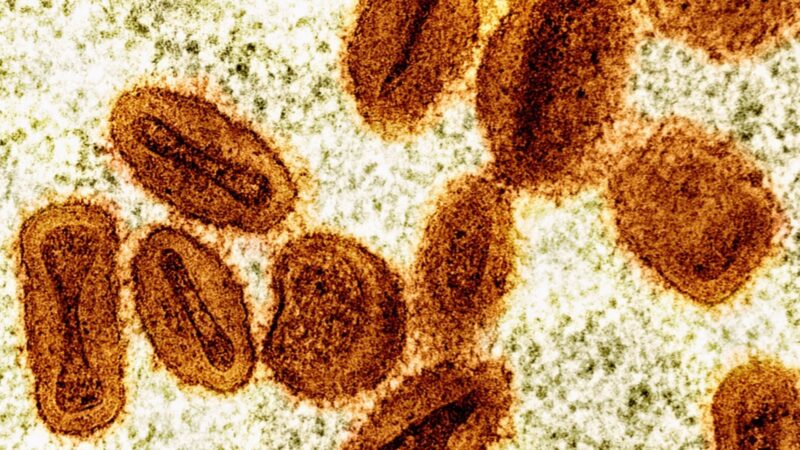
UK health authorities have identified a new strain of mpox, formerly known as monkeypox, in a person who recently returned from Asia. The virus is a combination of two major mpox types, and experts are currently assessing what it means for public health.
The UK Health Security Agency (UKHSA) says viral evolution is normal and that vaccination remains the most effective way to prevent severe illness, even though many mpox cases are mild.
Understanding the New Strain
The newly detected virus contains genetic elements from two mpox strains, known as clade Ib and clade IIb, but has not yet been given an official name.
Clade IIb is linked to the global mpox outbreak in 2022, which affected multiple countries worldwide. Clade Ib has recently shown signs of spreading locally in some European nations.
Health officials have urged gay, bisexual, and other men who have sex with men to ensure they are vaccinated, particularly if they are at higher risk. In the UK, vaccination is available for people who have multiple sexual partners, participate in group sex, or visit sex-on-premises venues.
The vaccine is estimated to be 75–80% effective against mpox, though its effectiveness against the new strain is still being studied.
Expert Warnings and Global Context
Dr Katy Sinka, head of sexually transmitted infections at UKHSA, said the new strain was detected through genomic testing. She added:
“It’s normal for viruses to evolve, and further analysis will help us understand more about how mpox is changing. Getting vaccinated is a proven way to protect yourself against severe disease, so please make sure to get the jab if you are eligible.”
Prof Trudie Lang, director of the Global Health Network at the University of Oxford, noted that the UK has strong systems to identify and control infections. However, in parts of the world where vaccine access is limited, controlling mpox is much harder. She added that monitoring the new strain’s spread and severity is essential to determine if it is more or less dangerous than previous strains.
Globally, nearly 48,000 mpox cases have been confirmed in 2025, with around 2,500 reported in the past month. Most cases remain in Central Africa. Dr Boghuma Titanji, assistant professor of medicine at Emory University, warned that continued circulation increases the chances of the virus evolving further, potentially establishing mpox as a persistent human disease.
What You Need to Know About Mpox
Mpox is a viral infection that can cause a skin rash or lesions lasting two to four weeks. Other common symptoms include fever, headaches, back pain, muscle aches, and fatigue.
The virus spreads through close physical contact, coughing, sneezing, or contact with contaminated clothing, bedding, or towels. Health officials advise anyone who suspects they may have mpox to contact NHS 111 for guidance.