
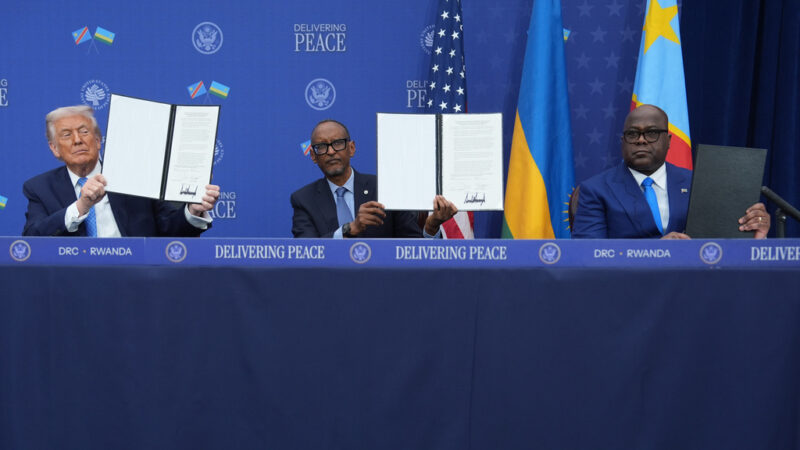
A deadly explosion in eastern Democratic Republic of Congo (DRC) has killed over 30 people and injured at least 20, following clashes between the national army and a pro-government militia, despite a recent U.S.-brokered peace agreement.
The blast occurred on Sunday evening in the town of Sange, South Kivu, according to residents and local civil society leaders. They said the Congolese army, known as FARDC, and Wazalendo forces, who assist the army against insurgents, engaged in a confrontation shortly before the explosion.
Conflict Persists Despite Peace Deal
Eastern Congo has long been a battleground for more than 100 armed groups vying for control of mineral-rich areas near the Rwandan border. The most prominent of these is the Rwanda-backed M23 group.
The ongoing conflict has triggered one of the world’s largest humanitarian crises, displacing more than seven million people.
The explosion comes less than a week after the U.S. helped broker a peace deal between the Congolese army and the M23 rebels. Analysts and residents, however, say violence continues despite the agreement.
“FARDC soldiers were returning from the front lines and tried to reach Uvira city,” said Faraja Mahano Robert, a local civil society leader. “Some refused orders to stop, shooting broke out, and then the bomb went off, killing many people.”
Many residents have fled the area, primarily toward Burundi. Amani Safari, a local resident, said, “We woke up a little better this morning, but people are still leaving. There were clashes to the east of the town, and two FARDC soldiers were killed early today.”
Another resident, David Kaserore, said the violence has made it difficult to distinguish combatants from civilians. “They are killing everyone. We demand the government end this war. We are exhausted,” he said.
The Congolese army has not yet responded to requests for comment.
Political Tensions Between Rwanda and DRC
President Felix Tshisekedi accused Rwanda in parliament on Monday of violating the peace agreement and destabilizing Congo while plundering its resources. The DRC and Rwanda leaders signed the U.S.-backed deal in Washington last week alongside former U.S. President Donald Trump, which followed months of peace negotiations.
Tshisekedi claimed that the day after signing, Rwandan forces launched attacks from Bugarama in Rwanda, causing significant destruction. He described it as “aggression by proxy” and dismissed claims that the violence was due to internal rebellion.
Burundi’s Foreign Minister Edouard Bizimana also accused Rwanda of conducting “indiscriminate attacks” on civilians and troops. Burundi has forces fighting alongside the Congolese army against M23. Bizimana warned that Kigali could face prosecution if attacks continue. Rwanda has not commented.
Escalation and Humanitarian Impact
Despite the peace deal, residents report intensified fighting in South Kivu. Earlier this year, M23 captured the strategic cities of Goma and Bukavu. The rebels reportedly receive support from around 4,000 Rwandan troops and have at times threatened to advance as far as Kinshasa, approximately 1,600 kilometers to the west.
The ongoing violence continues to devastate civilians in the eastern DRC, underscoring the fragility of peace efforts in a region rich in minerals but plagued by armed conflict.