
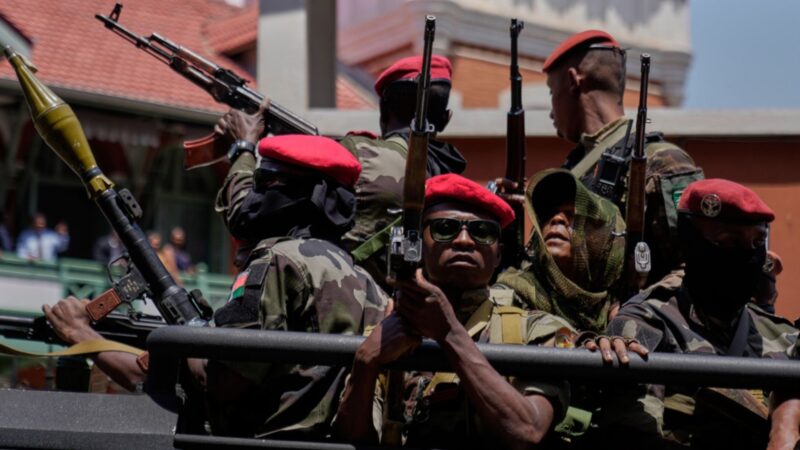
A brief moment of alarm gripped Benin on Sunday when soldiers appeared on state television announcing they had taken control. Within hours, the government said the coup attempt had failed, a now-familiar pattern in parts of West Africa.
The incident came just two weeks after Guinea-Bissau’s military removed the president following a tight election. These episodes add to a growing list of countries across the continent that have seen power seized at gunpoint since 2020.
Nine African nations have experienced coups or attempted takeovers in the past four years, raising questions about why instability is spreading and what it reveals about governance and security.
Deepening Discontent and Weak Institutions
Analysts say the recent wave of coups is rooted in worsening economic hardship, distrust in political elites and governments’ inability to manage insecurity.
Beverly Ochieng of Control Risks says many militaries in West Africa remain deeply embedded in political life, making intervention more likely when crises escalate. She notes that long-running insurgencies, poor economic conditions and frustration with civilian leadership often provide the opening for soldiers to act.
The trend stretches far beyond West Africa. Madagascar’s military stepped in last October after large youth-led protests demanded President Andry Rajoelina resign. He later fled as parliament moved to impeach him.
In Gabon, soldiers ended Ali Bongo’s decades-long family rule in 2023, with coup leader Brice Oligui Nguema later winning a presidential election. Chad’s Mahamat Idris Déby also took power after his father’s death in 2021, extending a dynasty that has shaped the country for over 30 years.
Guinea’s 2021 coup removed President Alpha Condé after he altered the constitution to seek a third term. The coup leader, Mamady Doumbouya, is running in elections this December after a referendum allowed junta members to contest.
Sudan’s takeover in 2021, led by Gen Abdel Fattah Burhan, unfolded after Omar al-Bashir’s removal, plunging the country into deeper turmoil.
And in Mali, Burkina Faso and Niger, all hit hard by jihadist violence, militaries have seized power claiming that civilian governments failed to keep populations safe.
A 2023 Afrobarometer survey found young Africans overwhelmingly support democracy, but many are frustrated with how it operates in practice.
Concerns over corruption and insecurity have pushed some to view military interventions as a faster route to stability, despite long-term risks.
Why Former French Colonies Are More Affected
Most of the recent coups have occurred in Francophone Africa. Only two major exceptions stand out: Sudan, once under British rule, and Guinea-Bissau, a former Portuguese colony.
Bakary Sambe of the Timbuktu Institute links the pattern to political systems inherited from France, strong presidential powers, centralised governance and heavy economic dependence on Paris after independence.
He argues that these structures, paired with widespread corruption and the failure to contain jihadist threats, create fertile ground for soldiers to cast themselves as national “saviours.”
He contrasts this with former British colonies, where political institutions tend to be more decentralised, with clearer separation between the military, judiciary and executive. According to Ochieng, this reduces the overlap of authority and lowers the likelihood of military intervention.
A Continent at a Crossroads
While every coup has its own dynamics, analysts agree that the surge reflects a broader crisis of confidence in democratic systems. Economic pain, insecurity, and perceptions of corrupt leadership are undermining trust in elected governments.
And with militaries continuing to position themselves as alternatives to struggling civilian rulers, many African states now face a difficult question: how to rebuild political systems strong enough to resist the next intervention.