
For most of his life, Mohamed Makhlouf farmed cannabis in silence and fear.
He began growing the crop at 14 in Morocco’s Rif Mountains, constantly watching the road and sleeping lightly, worried that police might arrive at any moment. An arrest could mean prison. A raid could wipe out an entire harvest overnight.
Today, that fear is gone
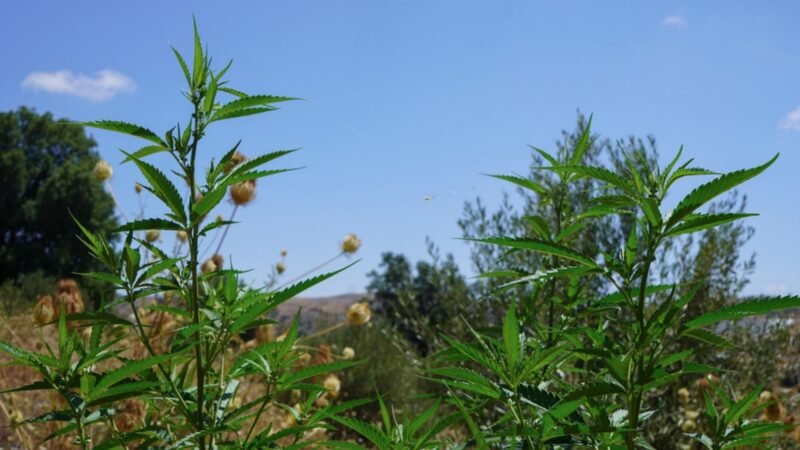
On his land, neat rows of a state-approved cannabis strain grow openly. Police still drive past, but this time, there is no panic. They know his crop is legal and sold through a licensed cooperative.
“Legalisation means freedom,” Makhlouf said. “If you want your work to be clean, you follow the law and work with the companies.”
Now 70, Makhlouf is among a small but growing group of farmers who once supplied Morocco’s vast illegal cannabis market and are now part of a tightly regulated legal industry focused on medicinal and industrial use.

A cautious shift in a long-shadowed industry
Morocco is the world’s largest producer of cannabis and the biggest supplier of resin used to make hashish. For decades, cultivation in the Rif Mountains supported hundreds of thousands of people, directly or indirectly, according to United Nations reports and Moroccan government data.
Authorities alternated between tolerating the trade and launching crackdowns. Farmers lived under the threat of arrest warrants. Many avoided towns and cities. Fields were sometimes burned during anti-drug campaigns.
Abdelsalam Amraji, another Rif farmer who has entered the legal system, said cannabis has long been the backbone of the local economy.
“People tried wheat, apples, nuts and other crops,” he said. “None of them worked.”
The risk was constant, but the income kept communities alive. While illegal cannabis still pays more, Amraji said legal farming offers something just as valuable.
“When it’s illegal, you live with fear and problems,” he said. “When it’s legal, you have peace.”
Legalisation under strict control
Morocco began changing course in 2021, becoming the first major illegal cannabis producer — and the first Muslim-majority country- to legalise certain forms of cultivation.
The law allows cannabis to be grown strictly for medical, pharmaceutical and industrial purposes. Recreational use remains illegal, and there are no signs that authorities plan to change that.
Officials said the goal was to reduce poverty, bring informal farmers into the formal economy and stabilise regions that have long felt marginalised.
In 2024, King Mohammed VI pardoned more than 4,800 farmers serving prison sentences linked to cannabis cultivation. The justice ministry said the move was meant to help experienced growers join the new legal system.
Since legal production began in 2022, the state has regulated every stage of the process — from seeds and fertilisers to licences, transport and sales.
Mohammed El Guerrouj, head of Morocco’s cannabis regulatory agency, said the challenge is balancing enforcement with support.
“Our role is to apply the law,” he said. “But we also have to help farmers and businesses succeed.”
Cooperatives, licences and new opportunities
Last year, authorities granted licences to more than 3,371 farmers across the Rif. Nearly 4,200 tonnes of legal cannabis were produced, according to official figures.
Near Bab Berred, the Biocannat cooperative works with around 200 small-scale farmers during harvest season. The raw plant is processed into CBD oil, skincare products and chocolates now sold in pharmacies across Morocco.
Some cannabis is also turned into industrial hemp for textiles. For medical use and export, products are refined to contain less than 1% THC, the compound responsible for cannabis’ psychoactive effects.
Aziz Makhlouf, the cooperative’s director, said legalisation has created jobs beyond farming.
“It’s not just growers,” he said. “There are people in packaging, transport, and irrigation. All of that exists because the work is legal.”
Despite these gains, farmers and experts say the system is under strain. The legal market is still too small to absorb the hundreds of thousands of people who depend on cannabis for income.
In August, protests broke out in parts of Taounate after cooperatives failed to pay growers for their harvest. Demonstrators carried banners reading “No legalisation without rights” and “Enough procrastination,” according to local media reports.
Illegal trade still dominates
The government says the transition will take time. But illegal cultivation remains widespread.
Official data shows cannabis is legally grown on about 14,300 acres (5,800 hectares) in the Rif. By contrast, more than 67,000 acres (27,100 hectares) are still used for illegal farming.
An April report by the Global Initiative Against Transnational Organised Crime said Morocco’s cannabis sector now functions as two parallel systems rather than a full transition.
“Many people still rely on illicit networks for income,” the report said, warning that this continues the same economic pressures the reforms aim to fix.
For now, legal and illegal cannabis farming exist side by side. Morocco is trying to bring a centuries-old trade out of the shadows without cutting off the livelihoods of those who depend on it.
For Amraji, the change still feels unreal.
“Cannabis is legal now, like mint,” he said. “I never thought I would see this in my lifetime.”