
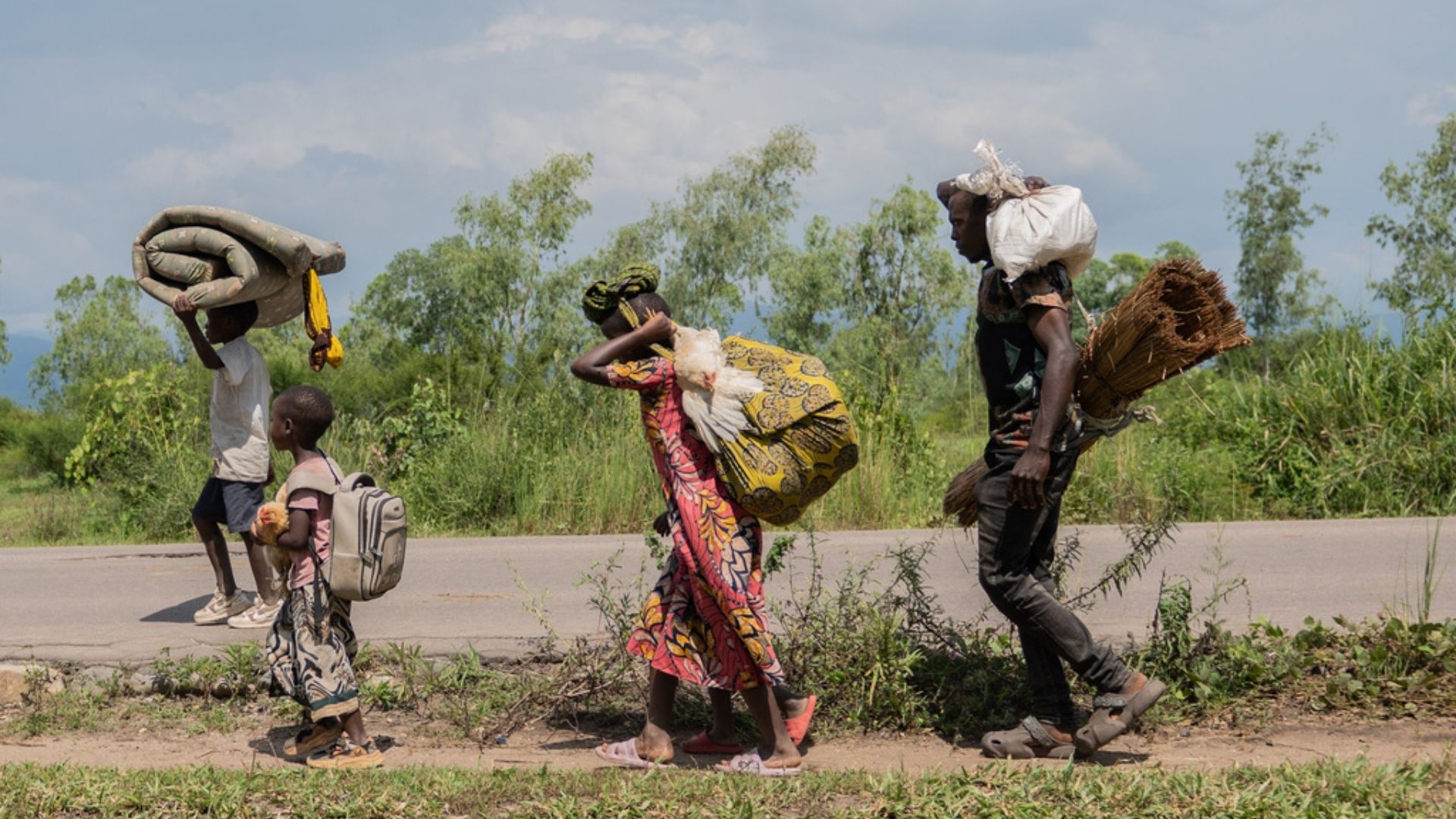
A tense silence hung over Uvira on Saturday, days after the Rwanda-backed M23 rebel group captured the key city in eastern Democratic Republic of Congo (DRC). The takeover has intensified fighting in the region, despite a U.S.-mediated peace agreement signed last week.
The Associated Press was given rare access to Uvira, once the Congolese government’s last major stronghold in South Kivu province, after the rebels took control of the provincial capital, Bukavu, in February. Analysts say the city’s fall allows M23 to strengthen a wide corridor of influence across eastern Congo.
Human Cost and Displacement
M23 said it took Uvira earlier this week following a rapid military offensive that began at the start of December. Regional officials report that more than 400 people have died and around 200,000 have fled their homes.
On the streets of Uvira, normal life has not returned. Military vehicles patrolled empty avenues while banks remained closed. Most residents stayed indoors, leaving only a few daring to move about during daylight hours. Armed M23 fighters were visible throughout the city after sunset.
“Some people left the city, but we stayed,” said Maria Esther, a 45-year-old mother of ten. “Life hasn’t returned to normal because there’s no money circulating, and we haven’t resumed our usual activities.”
Joli Bulambo, another resident, added: “People feared the same violence that happened in Goma, but thankfully there were fewer deaths here.”
Rebels Advance Despite Peace Deal
The M23 advance comes after a peace agreement between the Congolese and Rwandan presidents in Washington last week.
The United States has accused Rwanda of violating the deal by backing the rebels’ offensive in the mineral-rich region. Washington warned that it will take action against those undermining the agreement.
The deal did not directly include M23, which has its own separate negotiations with Congo. Both sides of the rebel group and government have accused each other of violating earlier ceasefire agreements. U.S.
Secretary of State Marco Rubio said on X (formerly Twitter) that Rwanda’s actions were a clear breach of the Washington accord and that the U.S. would respond. Rwanda has not commented.
The conflict now threatens to spill into neighboring Burundi, which has long stationed troops in eastern Congo. Reports say shells have landed near the Burundian town of Rugombo, raising fears of regional escalation.
Mineral Wealth and Regional Tensions
Eastern Congo is home to vast mineral resources, and over 100 armed groups, including M23, are fighting for control. The conflict has caused one of the world’s largest humanitarian crises, displacing more than seven million people, according to the United Nations.
Local UN agencies say more than 200,000 people have fled their homes since December 2. Civilians are also seeking refuge in Burundi, as fighting intensifies near the border. UN experts estimate M23 has grown from a few hundred fighters in 2021 to roughly 6,500 today, with alleged backing from Rwanda.
Congo’s Foreign Minister Thérèse Kayikwamba Wagner condemned Rwanda’s actions, warning that the peace process is at risk. She called on the UN Security Council to impose sanctions on those responsible and to restrict Rwanda’s access to mineral exports and UN peacekeeping missions.
M23’s deputy coordinator, Bertrand Bisimwa, told AP that peace agreements have largely remained theoretical. He said Uvira and surrounding areas have long been prone to ethnic violence.
Rwanda, meanwhile, denies backing M23 but acknowledged deploying troops and missile systems in eastern Congo last year for security reasons. UN experts estimate as many as 4,000 Rwandan soldiers may be in the region.