
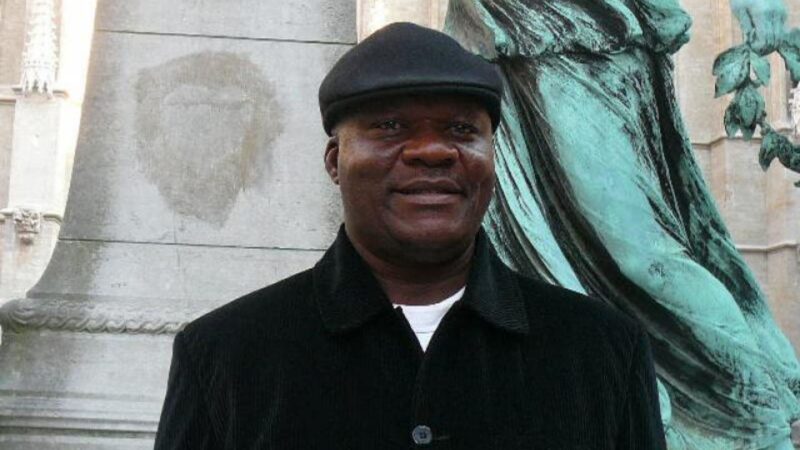
A French court has sentenced former Congolese rebel leader Roger Lumbala to 30 years in prison for crimes against humanity committed during the Second Congo War, in a ruling that rights groups say marks a major step against decades of impunity.
Lumbala, 67, was convicted on Monday by a Paris criminal court of complicity in crimes against humanity for his role in atrocities carried out in eastern Democratic Republic of the Congo more than 20 years ago.
Atrocities during the Second Congo War
Judges found that Lumbala led the Congolese Rally for National Democracy, a rebel movement backed by neighbouring Uganda, which was responsible for serious abuses against civilians in 2002 and 2003.
United Nations investigations documented widespread torture, executions, rape, forced labour and sexual slavery committed by the group. The violence mainly targeted the Nande and Bambuti ethnic communities in eastern Congo.
The court ruled that Lumbala bore criminal responsibility for these acts, even though they were carried out during a conflict that ended two decades ago.
Trial under universal jurisdiction
The case was heard in France under a law that allows national courts to prosecute crimes against humanity regardless of where they were committed.
It is the first time a Congolese political or military figure has been tried by a domestic court using the principle of universal jurisdiction for mass atrocities linked to the Congo wars.
Rights groups representing victims welcomed the verdict. Daniele Perissi, who heads the Democratic Republic of Congo programme at TRIAL International, described the ruling as historic, saying it showed that justice could still be delivered despite years of political protection and delay.
He said the court had sent a clear message that those responsible for large-scale violence could not rely on time or power to escape accountability.
From rebel leader to politician
After the end of the war, Lumbala went on to hold senior positions in Congo’s transitional government. He served as minister of foreign trade between 2003 and 2005 and later became a member of parliament.
In 2011, Congolese authorities issued an arrest warrant accusing him of backing the M23 rebel group. He later fled to France, where he had lived before the conflict, and remained there until his arrest.
The conviction comes as eastern Congo continues to face persistent violence. The mineral-rich region has been plagued by armed conflict since the 1990s, with more than 100 armed groups still active. Tensions rose again last week after the Rwanda-backed M23 group captured a key city in the east, underlining the enduring instability that has defined the region for decades.