
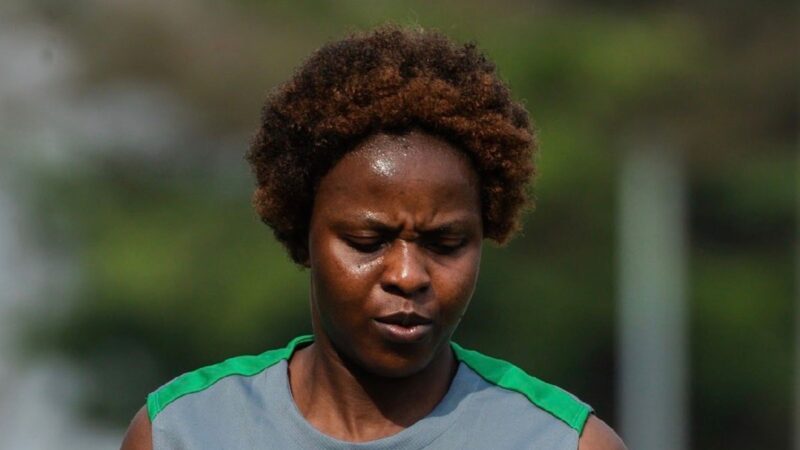
As the 2026 Women’s Africa Cup of Nations (WAFCON) gets underway, former Nigeria international Ngozi Okobi-Okeoghene is urging society to rethink how it treats female athletes who choose to get married or have children.
The four-time WAFCON champion says many women footballers in Nigeria face unfair criticism after becoming wives or mothers, with some fans wrongly believing they are no longer capable of competing at the highest level.
Okobi-Okeoghene, 32, returned to the Super Falcons setup earlier this year after a four-year absence following the birth of her son in 2024. Although she was later left out of Nigeria’s final squad for the tournament in Morocco, she says the reaction to her return exposed deep-rooted attitudes towards women in sport.
“Many people think once a woman gets married or has a child, she’s too old to play football,” she said. “Those comments make women feel bad about themselves.”
The midfielder, who has represented Nigeria 75 times, believes those perceptions are influencing the personal decisions of many players.
“Some girls are afraid to get married because they think they won’t be selected for the national team anymore,” she said. “Being an athlete doesn’t stop me from being a wife or a mother.”
She also criticised the abuse female footballers receive on social media, saying it reflects how some women are viewed in society.
“We need to encourage women and help them understand they can achieve more. Motherhood should never be the end of anyone’s story,” she added.
Returning to football after childbirth
Okobi-Okeoghene described her comeback as physically and mentally demanding. She resumed training five months after giving birth, saying regaining her fitness was the biggest challenge.
“My ability never disappeared. It was my fitness that I had to rebuild,” she said, crediting her teammates for supporting her through the process.
She was recalled by Nigeria coach Justin Madugu for international friendlies against Cameroon and Senegal earlier this year, calling the opportunity “a privilege” despite missing out on the final WAFCON squad.
“I’ll always support the Super Falcons. It’s my team and I will always be proud to represent Nigeria,” she said.
Gaps in support for African women footballers
While FIFA now guarantees maternity leave and protection from discrimination for female players, support remains inconsistent across many African leagues, where professional structures are still developing.
Okobi-Okeoghene recalled playing in Sweden, where she saw a teammate continue training during pregnancy before returning successfully to the pitch. She believes stronger support systems can make a major difference for female athletes balancing family life and their careers.
Family support key to her comeback
The Nigerian midfielder said her husband and family played a crucial role in helping her continue playing after becoming a mother.
“He wanted me to keep doing what I love. He never wanted me to end my career because I had a baby,” she said.
Her son has also become a source of motivation.
“Every day I see him, I want to work harder because I want him to watch me play football one day.”
Nigeria assistant coach Ann Chiejine, who also became a mother during her playing career, echoed that message, saying family support is essential for female footballers who want to combine motherhood with professional sport.
As Nigeria begins its WAFCON title defence in Morocco, Okobi-Okeoghene has one final appeal.
“Support your wives,” she said. “They should be able to follow their dreams while also having a family.”