
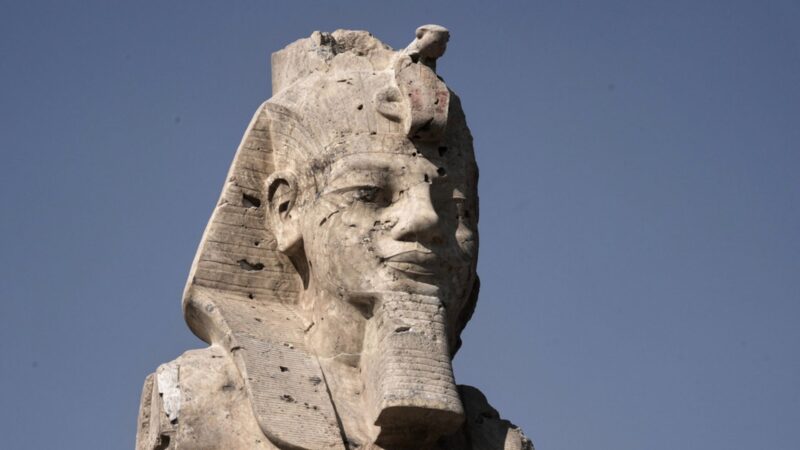
Egypt has unveiled the restored Colossi of Memnon, two enormous statues of Pharaoh Amenhotep III, in the ancient city of Luxor, marking a major milestone in the country’s efforts to boost cultural tourism.
The statues, made of Egyptian alabaster, have been painstakingly rebuilt over nearly two decades, drawing international attention to Egypt’s archaeological treasures.
“These colossal statues are finally standing tall again,” said Mohamed Ismail, secretary-general of the Supreme Council of Antiquities, speaking to The Associated Press. “Today we celebrate their restoration and the revival of a historic landmark.”
A Glimpse into Ancient Egypt
The Colossi of Memnon once guarded the entrance to Amenhotep III’s funerary temple, one of the largest and most lavish in ancient Egypt. The temple, built over 3,400 years ago, was destroyed by a massive earthquake around 1200 BC, leaving the statues toppled and fragmented.
Pieces were even repurposed in nearby temples, including Karnak, until archaeologists began restoring the site in the late 1990s.
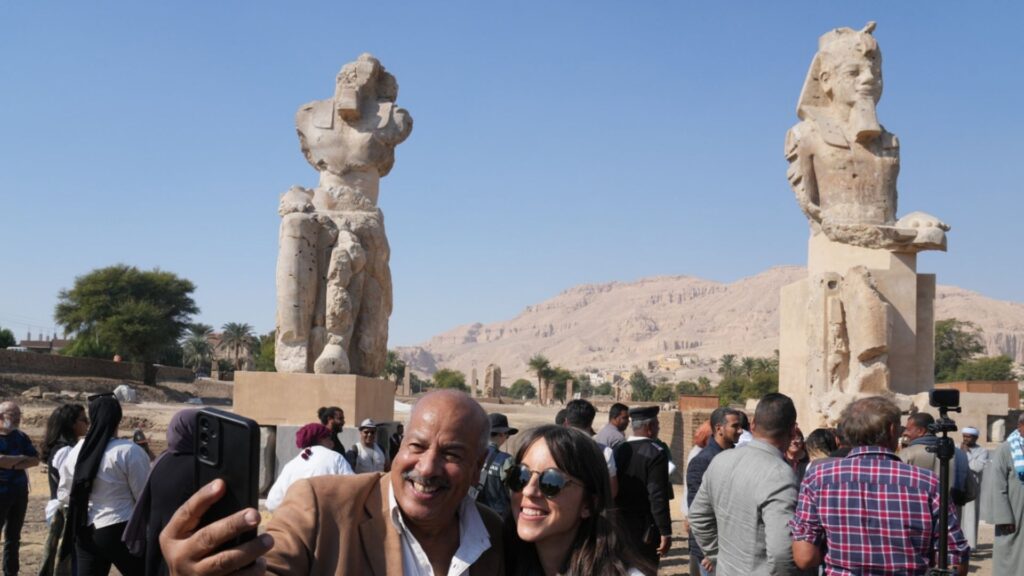
Led by German Egyptologist Hourig Sourouzian, the Egyptian-German archaeological team worked to piece together the statues from quarried fragments and reassemble them on their original pedestals. “This project is about saving the last remains of a once-prestigious temple and bringing Amenhotep III’s legacy back to life,” Sourouzian said.
The statues show the pharaoh seated, hands on thighs, facing east toward the Nile and the rising sun, wearing the nemes headdress and double crown, symbolising divine power. Two smaller statues at his feet depict his wife, Queen Tiye.
Luxor’s Ancient Wonders Drive Tourism Revival
The unveiling comes just six weeks after the opening of the Grand Egyptian Museum near the Giza Pyramids, part of Egypt’s ambitious push to attract tourists and showcase its pharaonic heritage. Tourism, a key pillar of Egypt’s economy, has been recovering after years of political unrest, the pandemic, and global travel disruptions.
“This site will captivate visitors for generations,” said Tourism and Antiquities Minister Sherif Fathy. “Luxor remains a treasure trove of history and discovery.”
In 2024, Egypt welcomed a record 15.7 million tourists, generating roughly 8% of the nation’s GDP. Officials forecast 18 million visitors in 2025, with a long-term goal of 30 million tourists annually by 2032, underscoring the growing global interest in Egypt’s ancient monuments.
The Colossi of Memnon, towering at 48 and 45 feet, now dominate the entrance to Amenhotep III’s western bank complex along the Nile, offering travellers and history enthusiasts a rare chance to witness one of ancient Egypt’s most iconic sites fully restored.