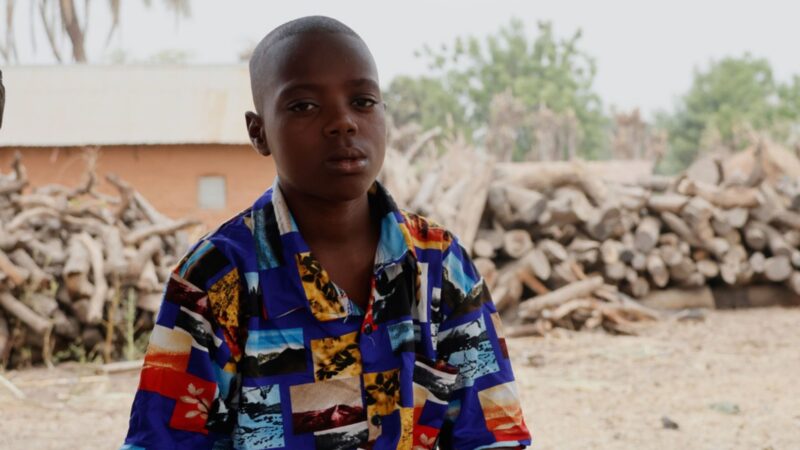
Onyeka Chieme was asleep in his dormitory at St Mary Catholic School in Papiri, Niger State, when a deafening crash shook the gates. Half-awake and confused, he ran toward the noise — only to see men armed with guns blocking the way.
“I froze for a second,” Onyeka recalled, his voice trembling. “Then I jumped through the window with some friends. We ran, but they chased us on motorbikes, firing into the air. They shouted that if we ran, they would shoot us.”
The attackers torched a statue of Mary and the Nigerian flag before loading the children onto motorbikes and buses. Onyeka, just 12 years old, was swept into one of the largest school abductions in Nigeria’s history: 303 students and 12 teachers kidnapped in a single night.
Days before, another group of 25 students had been taken in nearby Kebbi State, showing a growing pattern of violence.
Life in the bush: Fear, hunger, and constant threat
For more than two weeks, Onyeka and his classmates lived in the bush under constant threat. They slept on bare grass, often separated and blindfolded, with guns always in sight. Water came from a nearby river, and meals were scarce. Those who spoke out of turn were beaten.
“Every morning, I woke up wondering if we would survive the day,” Onyeka said. Military aircraft occasionally flew overhead, forcing the children to hide under trees. Nigerian authorities later said jets were searching forests for the abducted students, but analysts warn that armed gangs often use captives as shields to avoid being targeted.
Despite the fear, Onyeka remembers a strange calm when the attackers told them they only wanted money. “The first night, I thought they were going to kill us,” he said. “But their leader said we should not be afraid. If the money was paid, everyone would go home.”
Release and uncertainty
On the day of their release, Onyeka and 99 other students were counted and led out of the bush onto military buses. But 153 students and several teachers, including his brother, remained behind. “Some of us thought they would come for the rest soon,” Onyeka said, “but no one knows what happened to them.”
The Nigerian government has provided few details about how the children were freed or whether any arrests were made. In such cases, kidnappers often demand ransom, though officials do not confirm payments.
Returning home: Relief, fear, and hope
Coming home was a mix of relief and worry for Onyeka’s family. His parents were overjoyed to see him alive but continue to fear for the children still in captivity. “If my other son dies, I don’t think I could survive it,” said Anthony Chieme, Onyeka’s father. “It is better my child dies in my room than in the hands of bandits in the bush, where you see nothing.”
For Onyeka, the memory of the abduction lingers. “Even now, when I hear a motorbike or a loud noise, I feel scared,” he admitted. Yet he also feels lucky and grateful, holding onto hope that his friends and brother will one day return home safely.
The bigger picture: School abductions in Nigeria
Nigeria has seen nearly 1,800 schoolchildren abducted in attacks since 2014, when Boko Haram kidnapped 276 girls from Chibok.
\Analysts say armed groups continue targeting schools to demand ransom and draw attention. Campaigners warn that paying ransoms encourages more kidnappings, leaving families trapped between fear and financial pressure.
The wave of abductions has left communities hesitant to send children to school, deepening Nigeria’s education crisis. UNICEF reports that one in five out-of-school children globally is in Nigeria — the highest number in the world.