
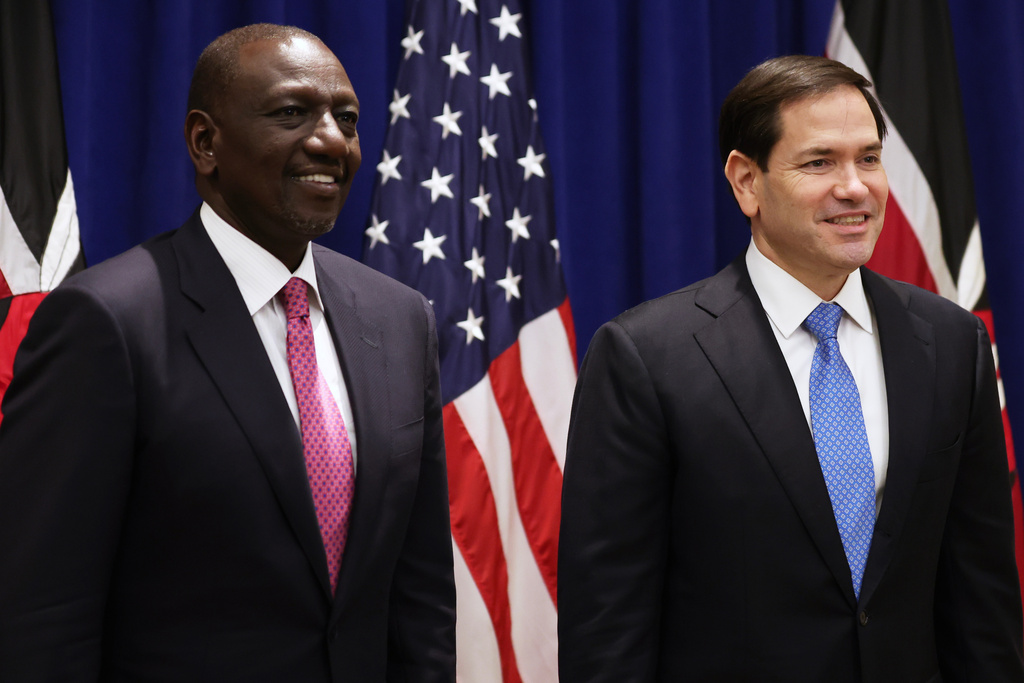
The Trump administration has launched its first major “America First” global health funding agreement, signaling a new approach to U.S. foreign aid. The five-year, $2.5 billion deal with Kenya aims to combat infectious diseases while aligning with U.S. foreign policy priorities.
Signed on Thursday by Kenyan President William Ruto and U.S. Secretary of State Marco Rubio, the agreement replaces a series of older health programs previously managed by the U.S. Agency for International Development (USAID), which was dismantled earlier this year.
A Shift in U.S. Global Health Strategy
The closure of USAID has sparked international concern, as it led to the defunding of hundreds of programs supporting maternal and child health, nutrition, HIV/AIDS treatment, and other essential services in developing countries.
Rubio said the new deal “aims to strengthen U.S. leadership and excellence in global health while eliminating dependency, ideology, inefficiency, and waste from our foreign assistance architecture.” He also praised Kenya for its contributions to the international stabilization force in Haiti.
President Ruto welcomed the agreement and confirmed that Kenya will continue its role in Haiti as gang suppression operations expand.
Details of the Kenya Health Agreement
Under the deal, the U.S. will contribute $1.7 billion, while Kenya will provide $850 million. Funding will support programs to prevent and treat HIV/AIDS, malaria, and tuberculosis. Clinics and hospitals enrolled in Kenya’s health insurance system are eligible, with a focus on faith-based medical providers.
Family planning programs that follow U.S. abortion restrictions will also qualify. U.S. officials emphasized that the agreement will not discriminate against LGBTQ+ individuals or sex workers.
Ouma Oluga, Kenya’s principal secretary for medical services, said, “This cooperation framework is a major shift from the past and will have a lasting impact on health for all.”
Impact on Africa’s Health Programs
Other African countries are expected to sign similar agreements by the end of the year. However, Nigeria and South Africa are unlikely to join due to political differences with the Trump administration. Talks with Nigeria are ongoing, focusing on concerns about the treatment of Christians.
Experts warn that the closure of USAID and cuts to programs such as the President’s Emergency Plan for AIDS Relief (PEPFAR) could set back efforts to fight HIV in Africa by years. South Africa, home to the world’s largest HIV treatment program, relied on U.S. aid for more than $400 million annually. A partial $115 million grant was later reinstated, but Trump has threatened full cuts over claims of persecution of the Afrikaner minority.
Similarly, Nigeria’s health system, supported by nearly $4 billion from USAID between 2020 and 2025, is now under strain. The federal government has historically allocated just 4–5% of its budget to health for its 220 million citizens, leaving aid-funded programs as vital lifelines.