
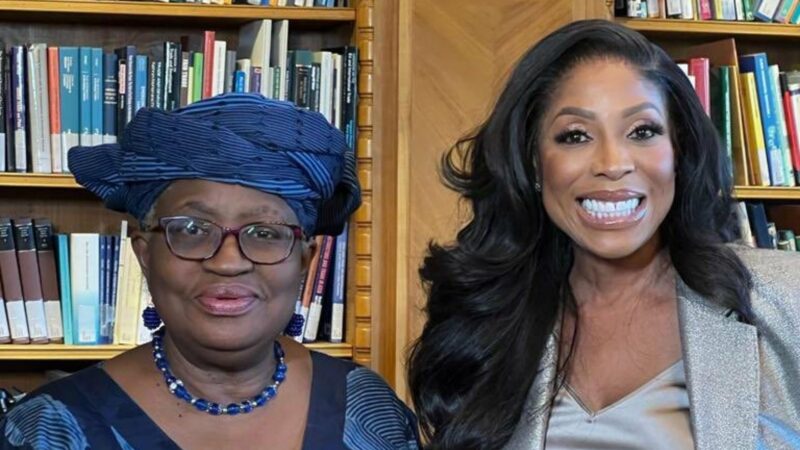
Forbes has released its annual ranking of the world’s 100 most powerful women, published at a time when global progress for women has stalled. In the United States alone, around 500,000 women left their jobs between January and October, one of the sharpest drops in recent history.
A joint study by McKinsey and Lean In shows that only 54% of companies now prioritise promoting women into leadership roles, compared with 90% four years ago. Meanwhile, UN officials warn that online misogyny is spreading, saying the growth of the “manosphere” is spilling into workplaces and limiting women’s opportunities.
Despite these challenges, women around the world are still breaking barriers. Across Africa, several leaders and executives are pushing industries and governments in new directions. Forbes highlighted six African women whose influence is shaping politics, business and global culture.
Mary Vilakazi — South Africa
Mary Vilakazi, born in 1977, has become one of the most respected figures in South Africa’s financial sector. She started her career at PwC, becoming one of the firm’s youngest partners at 27.
After serving as CFO of the Mineral Services Group, she moved into senior roles at MMI Holdings, eventually rising to Deputy CEO.
In 2018, she joined FirstRand as Group Chief Operating Officer. On 1 April 2024, she became the first woman, and the first Black woman, to lead the FirstRand Group in its 185-year history. FirstRand remains South Africa’s largest financial-services company by market value.
Judith Suminwa Tuluka — Democratic Republic of Congo
Judith Suminwa Tuluka made history in 2024 as the Democratic Republic of Congo’s first female Prime Minister. Before entering high-level politics, she worked in finance and later joined the United Nations Development Programme. Her expertise includes public finance, programme evaluation, budgeting and national planning.
She was appointed Minister of State and Planning in March 2023. A year later, on 1 April 2024, she was nominated as Prime Minister and formally sworn in on 12 June after legislative approval.
Netumbo Nandi-Ndaitwah — Namibia
Netumbo Nandi-Ndaitwah became Namibia’s first female president on 21 March 2025. A veteran of the country’s liberation struggle and a long-serving member of the ruling SWAPO party, she has spent decades in public service.
She previously held several major portfolios, including minister of international relations and cooperation between 2012 and 2015, and minister of environment and tourism from 2010 to 2012.
Before becoming president, she served as Deputy Prime Minister and later Vice President. Since taking office, she has moved quickly to address the country’s rising debt burden.
Mpumi Madisa — South Africa
Mpumi Madisa began her career in the insurance sector before joining Bidvest in 2003. Over the next decade, she held various senior roles, including client relations manager, corporate affairs director, sales and marketing director, and general manager for business development.
In March 2019, she was named CEO-designate of Bidvest, becoming the first Black woman to lead a top-40 Johannesburg Stock Exchange-listed company. She officially took over as CEO on 1 October 2020.
Under her leadership, Bidvest has expanded globally, returned to profitability and now manages a workforce of about 130,000 people.
Ngozi Okonjo-Iweala — Nigeria
Ngozi Okonjo-Iweala remains one of the world’s most influential economists and policymakers. She first gained global recognition in 2010 when she led a World Bank fundraising effort that secured US$49.3 billion for low-income countries.
She later chaired major international bodies, including Gavi, the Vaccine Alliance, and the Global Commission on the Economy and Climate.
On 1 March 2021, she became the first woman and the first African to serve as Director-General of the World Trade Organisation. She secured a second term in late 2024 after overwhelming support from WTO member states.
Mo Abudu — Nigeria
Mo Abudu, founder and CEO of EbonyLife Media, has built one of Africa’s most influential entertainment brands. Her work spans television, film, digital platforms and lifestyle ventures, helping reshape how African stories are told globally.
Her global profile rose further in 2025 when TIME Magazine named her one of the “100 Most Influential People in the World.” She recently announced several large-scale projects, including the Afro Film Fund, a US$50 million investment in African-origin films and series, and EbonyLife Place London, an expansion of the brand into the UK.