
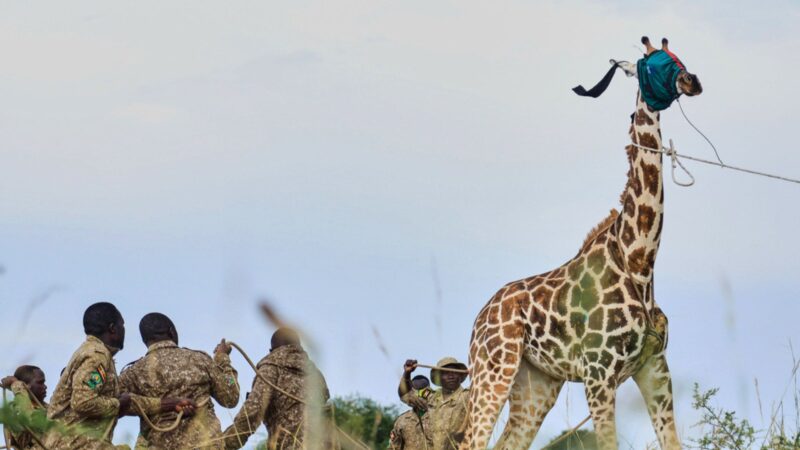
Uganda has launched a major wildlife conservation project to relocate endangered Nubian giraffes from Murchison Falls National Park to a restored reserve, as authorities seek to protect the species from growing environmental pressures, including oil exploration, climate change and habitat loss.
wildlife officials began moving 12 Nubian giraffes on Tuesday, among the world’s most threatened giraffe populations, from Murchison Falls National Park to Ajai Wildlife Reserve, located about 106 kilometres away in northern Uganda.
The carefully planned relocation, known as a wildlife translocation, is expected to take several days. Conservation authorities say the move will help expand the giraffes’ territory, reduce pressure on their existing habitat and strengthen efforts to preserve Uganda’s biodiversity.
Oil exploration raises concerns over wildlife habitat
Murchison Falls National Park, Uganda’s largest protected area, has become a centre of debate over the balance between economic development and environmental protection.
The region contains a significant share of Uganda’s oil reserves, with around 40% of the country’s deposits located in and around the park. Oil activities have increased in recent years, including drilling operations and the movement of heavy equipment through the protected area.
In June 2023, French energy company TotalEnergies began drilling activities under the Tilenga oil project, which is located within the Murchison Falls area.
Wildlife officials say expanding giraffe populations into other protected areas is a precautionary measure to protect the species if human activities or environmental changes further affect their current habitat.
“Creating new populations in other protected areas reduces pressure on the existing population,” said Patrick Atimnedi, Uganda Wildlife Authority’s assistant commissioner for veterinary services, who led the relocation exercise.
He said threats such as oil and gas development, tourism expansion, climate change, invasive species and the spread of bushes were reducing available space for wildlife.
Nubian giraffes are among the most endangered giraffe subspecies. The animals can grow up to six metres tall and weigh as much as 2,000 kilograms.
Ajai Wildlife Reserve gets new life after decades of decline
After a final briefing from conservation officials, the relocation operation began as rangers guided three giraffes onto specially prepared trucks.
Branches were placed inside the vehicles to provide food during the journey and help keep the animals calm.
At Ajai Wildlife Reserve, dozens of rangers waited for the arrival of the giraffes, which were introduced into their new 166-square-kilometre habitat.
The reserve, first established in 1937, once supported a rich variety of wildlife. However, decades of insecurity and widespread poaching in the early 1980s severely reduced animal populations.
The arrival of the Nubian giraffes is part of a wider restoration programme aimed at bringing wildlife back to Ajai.
Other species, including southern white rhinos, buffaloes, zebras and Uganda kobs, have already been reintroduced to the reserve.
Communities join conservation efforts
Wildlife officials say the restoration programme is already showing progress, with animals multiplying and expanding across the reserve.
“Many are now pregnant and spreading throughout the reserve, both inside and outside the electric fence,” said Wilson Katamigwa, Ajai Wildlife Reserve’s senior warden.
To protect the returning wildlife, authorities have expanded ranger patrols and introduced fencing in key areas to prevent poaching.
Local communities are also being encouraged to participate in conservation, with residents benefiting from tourism revenues generated by wildlife activities.
Katamigwa said communities around the reserve have become important partners in protecting the animals.
“They are ready to conserve with us, and we have a good relationship with local leaders,” he said.
Once the giraffes settle into their new environment, residents will be invited to visit the reserve and see animals that have been absent from the area for decades.
Conservation and tourism hopes grow
Officials hope the return of giraffes will boost tourism and create new economic opportunities for communities in the Madi Okollo district.
“The big dream is to see the economy of this place grow and for the district to benefit from tourism,” Katamigwa said.
For local residents, the arrival of the giraffes represents more than a conservation milestone.
Moses Ayoti, a community member near the reserve, said residents understand the importance of protecting the animals.
“The community is aware, vigilance is high, and I am sure they will take care of the animals because they also belong to the local community,” he said. Uganda’s giraffe relocation project highlights the growing challenge facing many African countries: protecting endangered wildlife while managing demands for natural resources, development and economic growth