
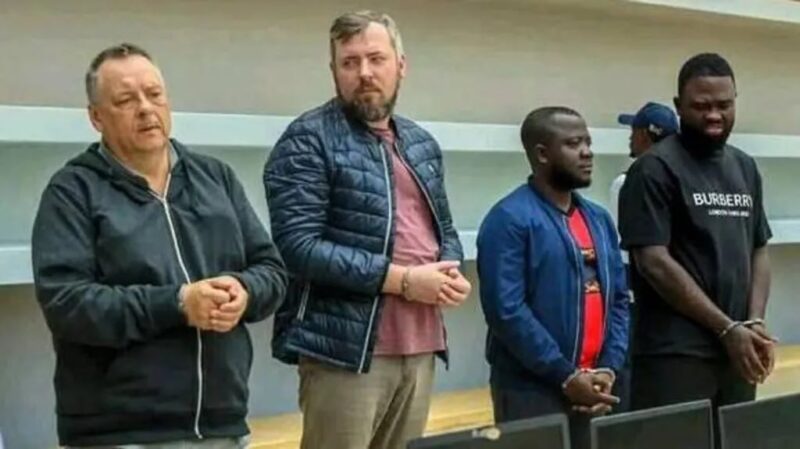
Luanda, A court in Angola’s capital has convicted two Russian nationals of terrorism and espionage, in a case tied to allegations of foreign interference in next year’s presidential election.
Igor Ratchin, described as a political consultant, was sentenced to 11 years in prison. Lev Lakshtanov, a translator, received eight years. Both men had pleaded not guilty.
The arrests
Angolan authorities arrested the pair last August. They were accused of fueling anti-government protests, running a disinformation campaign, and trying to influence next year’s election.
Their lawyers had asked for the men to be extradited to Russia under a bilateral agreement. It’s unclear whether the court granted that request.
The alleged network
Prosecutors linked the two men to a group called Africa Politology. Angolan officials describe it as a Russian political network that grew out of the Wagner mercenary group, which has since been dissolved.
According to the indictment, the network aimed to spread anti-Western messaging, build political contacts, and shape the outcome of Angola’s upcoming election.
Ratchin and Lakshtanov denied any ties to Wagner or the Russian state. They said they had simply been planning a Russian cultural centre in Luanda.
Wagner-linked operatives have been active elsewhere in Africa for years, including in the Central African Republic, Mali, and Madagascar.
Angolan co-defendants
Two Angolans stood trial alongside the Russians on related charges: sports journalist Amor Carlos Tomé and activist Francisco Oliveira.
Both denied wrongdoing.Tomé received a two-year suspended sentence. Oliveira was acquitted.
Prosecutors appealed the verdicts immediately after the ruling, which was delivered late Tuesday night. Tomé is expected to stay in custody while the appeal proceeds.
What the defence says
The Russians’ lawyer, Elizeu Nguiniti, declined to comment on the ruling itself. In court, he said he disagreed with the guilty verdicts, which covered four of eleven original charges: criminal association, espionage, terrorism, and illegally holding foreign currency, but said he would respect the court’s decision.
According to the Angolan outlet Novo Jornal, the two Russians told the court they had met privately with figures from both the ruling MPLA party and the opposition Unita party. They said these meetings had nothing to do with any illegal activity.
The court reportedly turned down a defence request to call some of those politicians as witnesses, saying their testimony wasn’t needed to establish the facts.
The prosecution’s case
Prosecutors claimed the two Russians helped organise deadly unrest in Angola in 2025. They allege the men paid local journalists and analysts over $24,000 (about £18,000) to spread pro-Russian, anti-government content meant to trigger political change.
Investigators also pointed to related publications, notes, and photos from the 2025 protests found on the defendants’ devices, along with alleged contact with senior Angolan officials.
Many Angolan activists reject the idea that the protests were anything other than genuine, grassroots unrest.
The defendants’ account
Novo Jornal reported that Lakshtanov told the court he had lived and worked in Angola for nearly 40 years, and that his long academic career made involvement in terrorism implausible.
Ratchin reportedly described himself as a businessman who came to Angola to set up a Russian cultural centre. He said payments he made to various people were simply compensation for services, and that he was caught off guard by his arrest and the charges that followed.
A troubled trial
The trial began in March and was controversial from the start.
At an early hearing, the prosecutor refused to read the indictment aloud, arguing the defendants already knew the charges against them. The defence objected, saying the public, including journalists, had a right to hear the allegations read out in open court. The prosecutor didn’t budge.
The indictment itself drew criticism even before the trial started. The defence argued much of it relied on assumptions rather than solid evidence.