
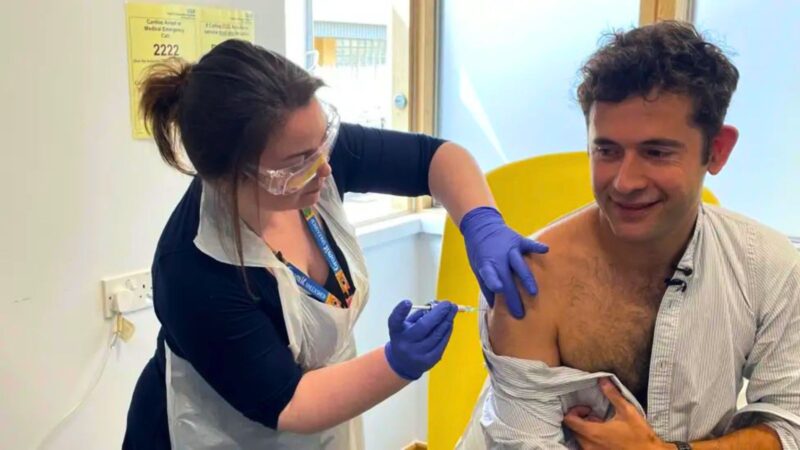
A United Kingdom volunteer has become the first person in the world to receive an experimental Ebola vaccine designed to protect one against the Bundibugyo strain of virus. This marks a major milestone in the global response to the ongoing outbreak in Central Africa.
The 37 year old volunteer Ed Hunt, said he decided to take part after following news of the Ebola outbreak in the Democratic Republic of Congo (DRC).
The vaccine was administered in Oxford as part of the BD-Ebov Phase I clinical trial, which will recruit 50 healthy volunteers aged 18 to 55. Researchers will assess whether the vaccine is safe and whether it generates a strong immune response against the virus.
“I had wanted to volunteer for the COVID vaccine trial but was unable to because of work commitments. After seeing news from DR Congo, I thought I’d like to do my bit,” Hunt said as quoted by the BBC.
Scientists at the University of Oxford’s Oxford Vaccine Group developed the vaccine in just eight weeks, using the same ChAdOx1 viral vector platform that was used for the Oxford-AstraZeneca COVID-19 vaccine. Researchers say decades of vaccine research and international collaboration made the rapid development possible.
The vaccine is designed specifically for the Bundibugyo ebolavirus (BDBV), a strain for which no licensed vaccine currently exists. Although vaccines are already approved for the Zaire strain of Ebola, they do not provide protection against Bundibugyo.
Researchers stressed that volunteers are not exposed to the Ebola virus during the study. Instead, the trial is focused on evaluating the vaccine’s safety, tolerability and ability to trigger protective immune responses.
If the early-stage trial is successful, researchers plan to expand testing through additional studies in Uganda, subject to regulatory approval, before moving to larger efficacy trials.
The Serum Institute of India, which partnered with Oxford on the project, has already manufactured and stockpiled around 620,000 doses of the experimental vaccine and supplied 4,000 investigational doses for the Phase I trial, allowing the programme to move quickly if the vaccine proves safe and effective.
The trial comes as the Bundibugyo Ebola outbreak continues in the Democratic Republic of Congo and neighbouring Uganda.