
The Democratic Republic of Congo is facing its fastest-spreading Ebola outbreak on record, with the World Health Organization warning that the virus is advancing faster than efforts to contain it.
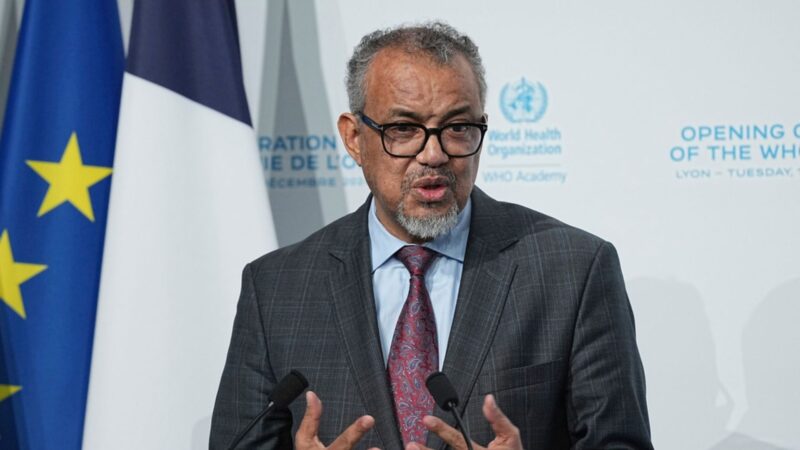
WHO Director-General Tedros Adhanom Ghebreyesus issued the warning during his visit to Congo on Wednesday, as he met government officials and health teams in the capital, Kinshasa.
Almost three months after the outbreak was officially declared, some affected areas are seeing Ebola cases double rapidly, according to Tedros.
“We must urgently and massively scale up all our efforts across all areas of the response,” he said, calling for stronger cooperation between national authorities and international partners.
Nearly 4,000 Ebola cases recorded in Congo
Congo’s Ministry of Health reported 3,874 confirmed Ebola infections as of Monday, including 1,751 deaths.
The outbreak is concentrated mainly in Ituri province in eastern Congo, one of the country’s most fragile regions. The area has been affected by years of armed conflict and remains difficult for health workers to access, particularly near the borders with South Sudan, Uganda and Rwanda.
The response has also been disrupted by strikes among some frontline health workers who say they have not been properly paid.
Several workers reported receiving delayed payments in recent days for duties carried out since the outbreak began, but they are still demanding better wages and working conditions.
Residents say the disruption has already had deadly consequences.
Anicet Baluku, a resident of Bunia, the capital of Ituri, said his two brothers died from Ebola during the crisis.
“We urge authorities to quickly find a solution to prevent other families from suffering the same tragedy,” he said.
US announces additional Ebola funding
The United States announced an additional $242 million in funding to support Ebola response operations, preparedness measures and humanitarian assistance linked to the outbreak.
The latest contribution brings total direct US support for the response to more than $512 million, according to the US Department of State.
Second-largest Ebola outbreak in history
Health officials say the current outbreak has become the second-largest Ebola outbreak ever recorded, surpassed only by the 2014-2016 crisis in West Africa, which infected more than 28,000 people and killed over 11,000.
The virus responsible for the current outbreak is the Bundibugyo strain of Ebola. Unlike some other Ebola variants, there is currently no approved vaccine or treatment specifically available for this strain.
Local officials believe the virus may have been spreading silently in remote communities before the outbreak was officially announced on May 15.
Medical charity Doctors Without Borders (MSF) said the situation remains critical, warning that while the response has expanded, it is still not reaching communities quickly enough to stop new infections.
“The response is growing but is still not reaching communities fast enough to break transmission chains,” the organisation said.
Weak contact tracing fuels new infections
Africa Centres for Disease Control and Prevention (Africa CDC) chief Dr Jean Kaseya said contact tracing efforts remain a major challenge.
During a visit to Bunia, he said between 60% and 70% of new Ebola cases are being detected outside the group of people already identified as having been exposed to infected patients.
Health officials say delayed diagnosis is contributing to the high death rate. Congo’s Ministry of Health reported a fatality rate of around 45%.
Among the latest 77 cases recorded within a 24-hour period, 44 patients died.
Currently, at least 717 patients are receiving care in isolation centres, while 749 people have recovered.
Communities key to stopping Ebola spread
Kaseya said Africa CDC is working with local and international partners to improve early detection, strengthen monitoring of contacts, expand access to treatment and build trust within affected communities.
Tedros also stressed that local communities must play a central role in the fight against the outbreak.
“Communities must be at the centre of and have ownership of the response,” he said, adding that Ebola cannot be defeated without public trust and cooperation.
Health authorities say urgent action is needed to expand testing, improve treatment access and support frontline workers as Congo battles one of its most serious Ebola outbreaks in years.