
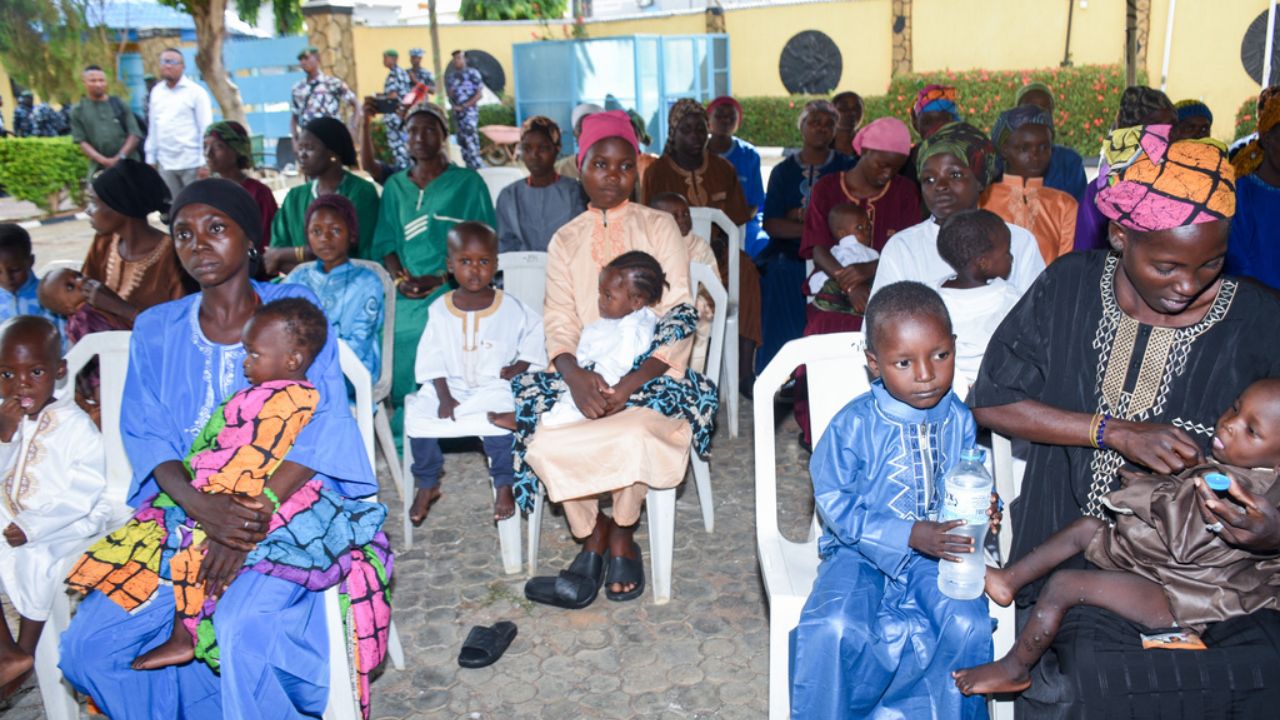
Some of the 163 kidnapped Nigerians rescued from jihadi captivity this week are now speaking out about six months of fear, hunger and loss.
The freed captives, mostly women and children, were among more than 300 kidnap victims freed by Nigerian forces this week.
They were handed over to authorities in Ilorin, capital of Kwara state, on Friday for medical checks, awaiting their return home to reunite with families.
“I Still Cannot Find the Right Words”
Mary Ishaya, 44, recalled going days without food and being forced, alongside other captives, to bury hostages who died during their captivity. She had never touched or buried a body before.
“I still cannot find the right words to describe what has happened to us,” she said. “We saw death and suffering.”
The captives were abducted on February 3, when jihadi militants stormed the village of Woro, killing more than 160 people.
At the hospital where they’re now receiving care, many freed captives appeared emaciated, some too weak to stand, others carrying visible injuries and the emotional weight of their ordeal.
Several women learned only after their release that their husbands had been killed in the February attack.
Survivors described giving up hope of ever returning home.
They spoke of people falling ill, enduring beatings from the rain while exposed in forest hideouts, and being told to hide whenever Nigerian military helicopters flew overhead.
Amira Saliu, a nurse among those freed, said she helped roughly 10 pregnant women give birth while in captivity.
“I had no choice but to use my bare hands,” she said.
Targeted for Resisting Jihadi Preaching
Residents of Woro believe the killings and kidnappings were retaliation for the community’s resistance to jihadi religious teachings.
Hauwa Saliu, 30, whose husband was killed in the attack, said captors repeatedly pressured abductees to accept their preaching. She refused.
“We prayed to God to help us go back home, but it never really crossed our minds that we were going to go back home,” she said.
Nigeria’s “Largest Rescue Operation Ever”
February’s attack ranks among the deadliest in Nigeria in recent years and reflects a broader shift: militants once concentrated in the north are increasingly moving south, into regions where armed groups often outnumber the country’s stretched security forces and compete for territory and resources.
The United States is providing military support to Nigeria under an agreement aimed at protecting Nigerian Christians, though that assistance remains largely limited to logistics and intelligence support focused on the north.
Mass kidnappings, including of schoolchildren, have become a defining feature of Nigeria’s security crisis.
The Woro victims, from a Muslim-majority community, were freed this week alongside 145 other captives, most abducted from neighbouring Niger state. Authorities have not disclosed how the rescue was carried out inside the dense forest of Kainji Lake National Park.
Nigerian President Bola Tinubu called it the “largest rescue operation ever” conducted in a single day and pledged to intensify operations against armed groups.
A Push to Fix Nigeria’s Security Gaps
In areas with limited government presence, some jihadi groups have positioned themselves as an alternative to state authority. A central challenge remains the poor welfare of Nigeria’s overstretched, underpaid security forces — an issue Tinubu has moved to address with recent pay increases and a mass recruitment drive for the military.
Sekinat Ojeniyi, a senior analyst at global risk consultancy Africa Practice, says Nigeria needs to shift from reacting to attacks toward preventing them through better use of intelligence.
“It is time for us to recheck how much our security apparatus does to prevent attacks, she said.