
Seventy years ago, roughly 20,000 women of every race walked to Pretoria to protest apartheid laws that forced Black women to carry passes restricting their movement.
On Sunday, South Africa marks the anniversary of that 1956 Women’s March, a defining moment in the country’s struggle against white minority rule.
But for many South African women, the fight that began that day hasn’t ended. Decades later, they’re still confronting high rates of gender-based violence, poverty and inequality.
A 2024 study backed by UN Women found more than one in three South African women have experienced physical or sexual violence in their lifetime.
“We simply believed it was the right thing to do”
Ramnie Dinat was a teenager on August 9, 1956, helping her mother, anti-apartheid activist Ama Naidoo, organise women ahead of the march. Black, Indian and even some white women marched together that day.
“Black women were organising, and Indian women couldn’t be silent,” Dinat told The Associated Press. She said no one marching that day imagined history would remember it.
“We were ordinary women who believed we could make a difference,” she said. “We simply believed it was the right thing to do.”
A prison turned into a monument
Many of the march’s leaders and participants were later imprisoned at the Women’s Jail in Johannesburg, a key part of apartheid’s prison system where inmates were segregated by race.
Today, it stands as a museum near the Constitutional Court, marking the country’s path from oppression to democracy.
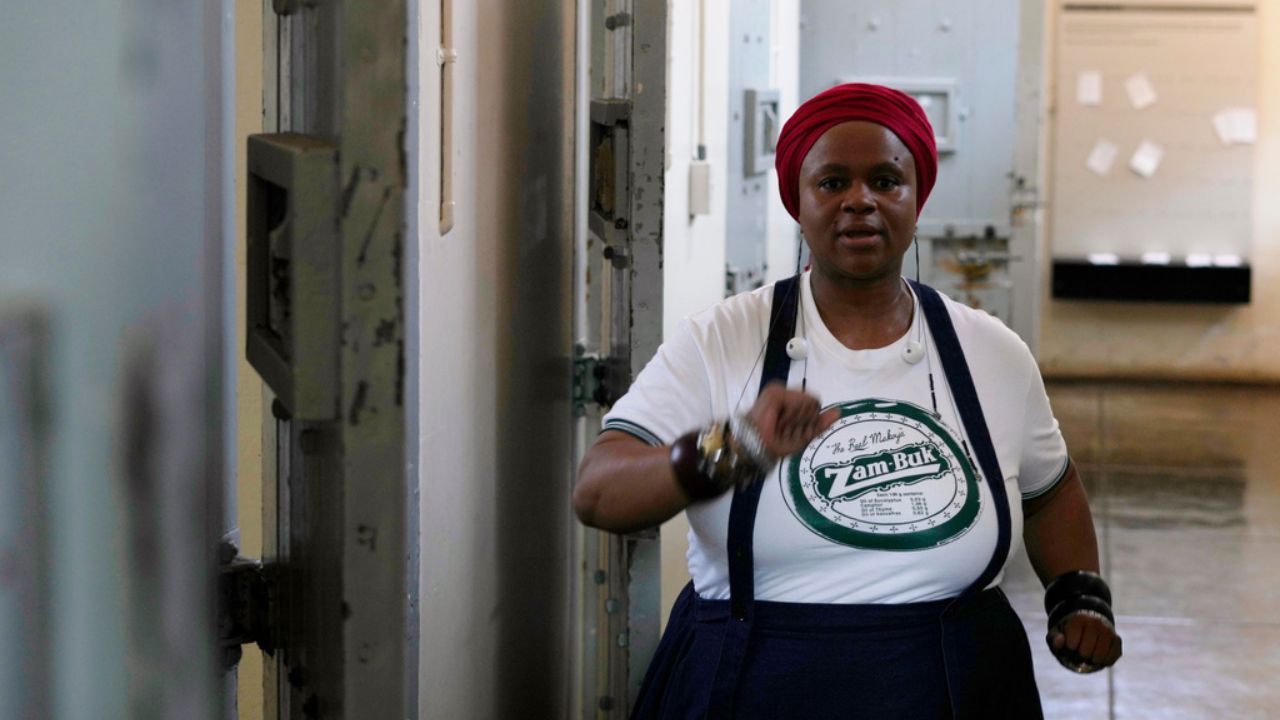
“It was designed to break, humiliate, dehumanise,” said Nolubabalo Memese, Visitors Services Manager at Constitution Hill, which houses the former prison.
She said Black women held there weren’t even permitted underwear or proper sanitary products.
The museum now honours both well-known figures, such as Winnie Madikizela-Mandela and Albertina Sisulu, and thousands of ordinary women whose names never made it into history books.
“Our freedom is built on the shoulders of those kinds of women who were at this prison,” Memese said.
Paralympic wheelchair tennis champion Kgothatso Montjane, who won the 2024 Wimbledon wheelchair doubles title, sees a direct line between that struggle and her own success.
“Today I’m the first Black South African woman to compete in all four major tennis tournaments,” she told the AP, crediting the women of 1956 with paving the way.
A new threat to freedom
Apartheid ended in 1994, and South African women are legally free to move, work and participate in public life. But Memese says a different obstacle has taken its place.
“There’s a different monster which precludes us from enjoying freedom of movement and economic participation. And that’s gender-based violence. That’s crime,” she said. “If you want to go jog at six o’clock and it’s a bit dark, you’d rather not.”
The United Nations has called South Africa’s rates of violence against women and girls a crisis and a “national wound.”
Economic barriers still hold women back
Government data shows South African women remain more likely than men to be unemployed, more likely to carry the burden of unpaid care work, and underrepresented in senior leadership roles.
Montjane says similar structural barriers exist in sport, where financial access, not talent alone, often determines who reaches elite competition.
“The barriers I had to overcome … in a sport like tennis, it’s just a financial issue,” she said. “They don’t lie when they say tennis is a white sport, and you don’t really find people of colour dominating in this sport.”
Even so, she believes the legacy of 1956 continues to open doors. “The platform has been set,” she said.
Building the future from the bricks of the past
When South Africa demolished the old apartheid-era Women’s Jail, some of its original bricks were reused to build the museum that now stands in its place, a detail that carries deep meaning for Memese.
“We are using the bricks of the past to build our future,” she said. “Once we forget the past, it’s very easy for us to make the same mistakes.”
For Dinat, one of the few people alive today who marched in 1956, the lesson remains unchanged seven decades later.
“Every generation has its own struggles,” she said, “and every generation has to decide whether it will stand up for what is right.”